
If you hear a knocking or pinging sound coming from your engine when you press the accelerator, it may indicate a problem with the combustion process inside the engine. Many drivers wonder why their car engine knocks when accelerating, especially when the noise appears during uphill driving or sudden acceleration.
Engine knocking occurs when the air and fuel mixture inside the engine cylinders ignites unevenly. Instead of a smooth combustion process, the fuel detonates improperly, creating knocking or pinging sounds. Because this issue can affect engine performance and cause long-term damage, it is important to identify the cause as soon as possible.
Understanding what causes engine knocking can help drivers determine when professional inspection may be necessary.
What Is Engine Knocking?
Engine knocking, sometimes called detonation or pinging, occurs when fuel ignites at the wrong time during the combustion cycle. In a properly functioning engine, the spark plug ignites the air-fuel mixture at a precise moment.
When engine knocking occurs, combustion happens unevenly or prematurely, creating pressure waves inside the cylinder. These pressure waves produce the knocking sound that drivers hear while accelerating.
This problem can affect engine efficiency and performance if it continues for an extended period.
Common Reasons Your Engine Knocks During Acceleration
Low Octane Fuel
One of the most common causes of engine knocking is fuel with an octane rating lower than what the engine requires. Higher-performance engines are designed to operate with fuel that resists early ignition.
When low-octane fuel is used, the fuel mixture may ignite too early during acceleration, producing knocking sounds.
Switching to the recommended fuel grade can often eliminate this issue.
Carbon Buildup in the Engine
Over time, carbon deposits can accumulate inside the combustion chamber. These deposits reduce the available space inside the cylinder and increase internal pressure.
When pressure rises too high, the air and fuel mixture may ignite prematurely, causing engine knocking.
Carbon buildup is common in vehicles that have accumulated higher mileage or have not received regular maintenance.
Faulty Knock Sensor
Modern vehicles use a knock sensor to detect engine knocking and adjust ignition timing accordingly. If the knock sensor fails or sends incorrect signals, the engine control module may not correct the combustion timing properly.
Without this adjustment, knocking may occur more frequently during acceleration.
A faulty knock sensor usually requires diagnostic testing to confirm the issue.
Incorrect Ignition Timing
Ignition timing controls when the spark plug fires during the combustion cycle. If the spark occurs too early or too late, combustion may not occur efficiently.
Incorrect ignition timing can create knocking sounds, reduced engine performance, and increased fuel consumption.
This issue may result from sensor problems or engine control system malfunctions.
Lean Air-Fuel Mixture
The engine requires the correct balance of air and fuel for proper combustion. If the engine receives too much air and not enough fuel, the mixture becomes lean.
Lean mixtures burn hotter and can increase the risk of premature ignition inside the cylinders.
This imbalance can lead to engine knocking when accelerating.
Signs That Engine Knocking May Be Developing
Drivers experiencing engine knock may notice several symptoms while driving.
Common signs include:
• Knocking or pinging sounds during acceleration
• Reduced engine performance
• Hesitation when pressing the gas pedal
• Increased fuel consumption
• Dashboard warning lights
These symptoms may appear gradually and become more noticeable over time.
Why Engine Knocking Should Not Be Ignored
Although the noise may initially seem minor, persistent engine knocking can cause long-term damage to internal engine components.
Continued detonation inside the cylinders can damage pistons, cylinder walls, and valves. Repairing internal engine damage can be significantly more expensive than addressing the underlying cause early.
For drivers in Houston, addressing engine knocking promptly can help ensure reliable vehicle performance during daily driving conditions.
How Mobile Mechanics Diagnose Engine Knocking
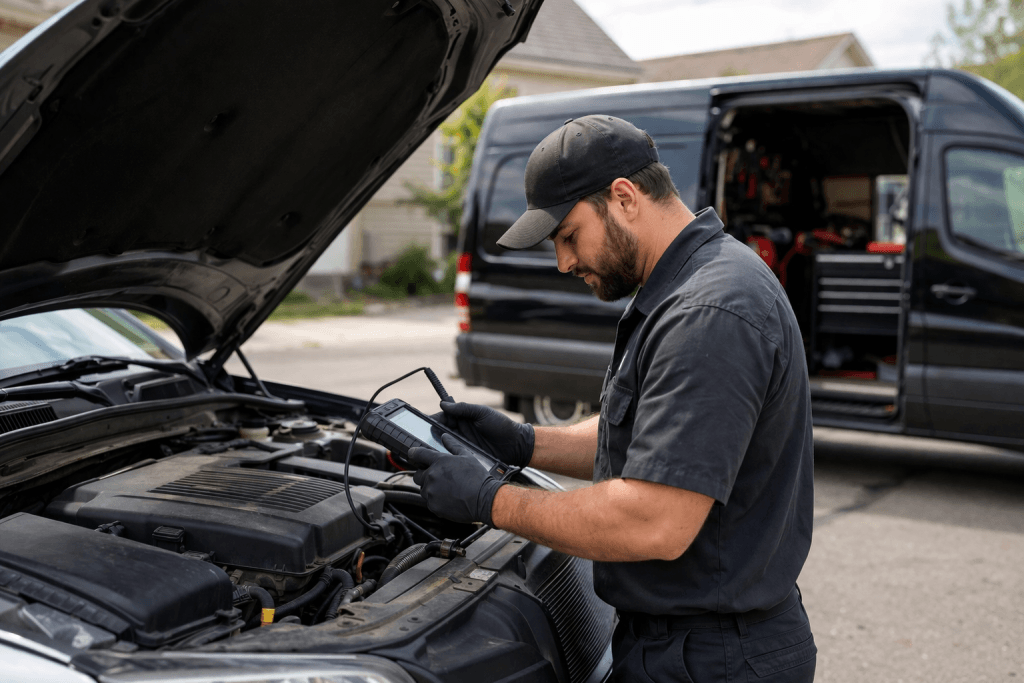
Mobile mechanics can inspect your vehicle at your location to determine the cause of engine knocking. This can be helpful if the noise becomes noticeable during driving and the vehicle requires professional diagnostics.
During inspection, technicians may scan the vehicle’s computer system for error codes, inspect the fuel system, evaluate ignition timing, and test engine sensors.
These diagnostic steps help identify the cause of knocking and determine the appropriate repair.
Benefits of Mobile Mechanic Services in Houston
Mobile mechanic services allow drivers to receive vehicle diagnostics without visiting a repair shop. Instead of waiting at a service facility, technicians can inspect the vehicle at your home, workplace, or parking location.
For drivers in Houston experiencing engine noise or performance issues, mobile service provides a convenient way to identify the problem and restore vehicle performance.
Preventing Engine Knocking
Routine vehicle maintenance can help reduce the risk of engine knocking. Using the recommended fuel grade, maintaining the ignition system, and addressing warning lights promptly can help ensure proper engine performance.
Regular inspections can also detect carbon buildup and sensor problems before they affect engine operation.
Maintaining proper engine health helps ensure smoother and more efficient driving.
If your car engine knocks when accelerating, the cause may involve low-octane fuel, carbon buildup, faulty knock sensors, incorrect ignition timing, or a lean air-fuel mixture. Because engine knocking can lead to internal engine damage over time, identifying the cause early can help prevent more serious problems.
Professional diagnostics can determine the source of the issue and restore proper engine performance.
Need Help With Engine Knocking in Houston?
If your vehicle makes knocking sounds during acceleration, professional inspection can help identify the problem.
Mobile Mechanic in Houston, TX provides convenient on-site vehicle diagnostics and repair services throughout Houston.
Schedule service today to have your vehicle inspected and restore smooth engine performance.