
Anyone who has spent a summer in Houston knows the humidity here is not subtle. Step outside on a July afternoon and the air feels thick enough to wring out, and that same moisture that makes walking to your car uncomfortable is quietly working against your vehicle’s electrical system every single day. While most drivers think about humidity in terms of personal comfort, it is actually one of the more common causes of electrical gremlins that Houston mechanics deal with on a regular basis.
Why Moisture And Heat Are Such A Damaging Combination
Electrical systems and moisture have never gotten along well, but Houston’s specific combination of high humidity and intense heat creates conditions that are especially hard on wiring and connectors. Warm, moist air finds its way into connectors, junction boxes, and any small gap in a wiring harness, and once inside, that moisture promotes corrosion on metal contacts. Unlike a single rainy day that dries out quickly, Houston’s humidity is a near constant presence for much of the year, giving corrosion far more opportunity to develop than it would in a drier climate.
Heat compounds the issue further. As temperatures rise and fall throughout the day, components expand and contract slightly, which can pump humid air in and out of connectors through tiny gaps in seals and housings. Over time, this repeated cycle allows moisture to work its way deeper into places it was never meant to reach, corroding contacts that were designed to carry a clean, uninterrupted electrical signal.
Where Corrosion Tends To Show Up First
Ground connections are often among the first casualties of humidity related corrosion. These connections, frequently located on the body or frame of the vehicle, are responsible for completing electrical circuits throughout the car, and any corrosion at these points can cause a wide range of seemingly unrelated electrical issues. Battery terminals are another common trouble spot, since the combination of battery gases and ambient humidity accelerates corrosion buildup faster than most drivers expect.
Connectors for sensors, particularly those located in the engine bay where heat and moisture both concentrate, are especially vulnerable. A corroded sensor connector can cause a check engine light to appear intermittently, sometimes clearing itself temporarily once the connection dries out, only to return again during the next humid stretch of weather. Wiring harnesses that run along the underside of the vehicle face similar risks, particularly on older vehicles where insulation may have started to degrade.
The Electrical Symptoms Houston Drivers Report Most
Intermittent starting problems are one of the most common complaints tied to humidity related corrosion. A car that starts fine most mornings but occasionally struggles, particularly after a heavy overnight rain or an especially humid stretch, often points toward a corroded connection somewhere in the starting circuit rather than a battery that is simply failing outright. If this sounds familiar, our guide on the top 10 reasons your car won’t start and how to get back on the road covers a range of causes, some of which trace directly back to the kind of corrosion issues common in Houston’s climate.
Flickering dashboard lights, power windows that work inconsistently, intermittent check engine lights that seem to appear and disappear without a clear pattern, and electrical accessories that occasionally lose power for no obvious reason are all symptoms Houston mechanics see regularly. These issues can be frustrating to diagnose because they often do not appear consistently, showing up more frequently during particularly humid weeks and seeming to improve during drier stretches, which can make drivers think the problem resolved itself when it has actually just gone quiet temporarily.
Why These Problems Are Easy To Misdiagnose
Intermittent electrical issues are notoriously tricky, even for experienced technicians, because the very nature of a corroded connection means it may test fine on a dry day and fail only under specific humidity or vibration conditions. A visual inspection alone will not always catch a corrosion issue hidden inside a sealed connector, which is why a technician familiar with Houston’s climate and its typical failure points often has an advantage in diagnosing these problems compared to someone unfamiliar with how consistently humidity affects vehicles in this region.
Protecting Your Vehicle From Humidity Related Corrosion
A few preventive habits can meaningfully reduce your risk. Applying dielectric grease to battery terminals and accessible connectors creates a protective barrier against moisture intrusion, and it is a simple step that many Houston drivers overlook entirely. Keeping your battery terminals clean and checking them periodically for early signs of corrosion allows you to catch problems while they are still minor rather than after they have caused a starting failure.
It also helps to think about where your vehicle spends most of its time. A car parked outdoors near Buffalo Bayou or in a low lying area prone to standing water after heavy rain faces more exposure than one parked on higher, drier ground. If your regular parking situation puts your vehicle in frequent contact with standing water or unusually damp conditions, it is worth being a bit more proactive about inspections, since that additional exposure adds up faster than most drivers expect.
Parking in a garage or under covered parking when possible reduces direct exposure to the heaviest humidity and rain, and addressing any small wiring damage quickly, before moisture has a chance to work its way into exposed conductors, can prevent a minor issue from becoming a much larger electrical repair. Regular inspections of accessible connectors, particularly in the engine bay, give a technician the chance to spot early corrosion before it causes a noticeable symptom.
Why A Mobile Mechanic Is Well Suited For This Kind Of Diagnosis
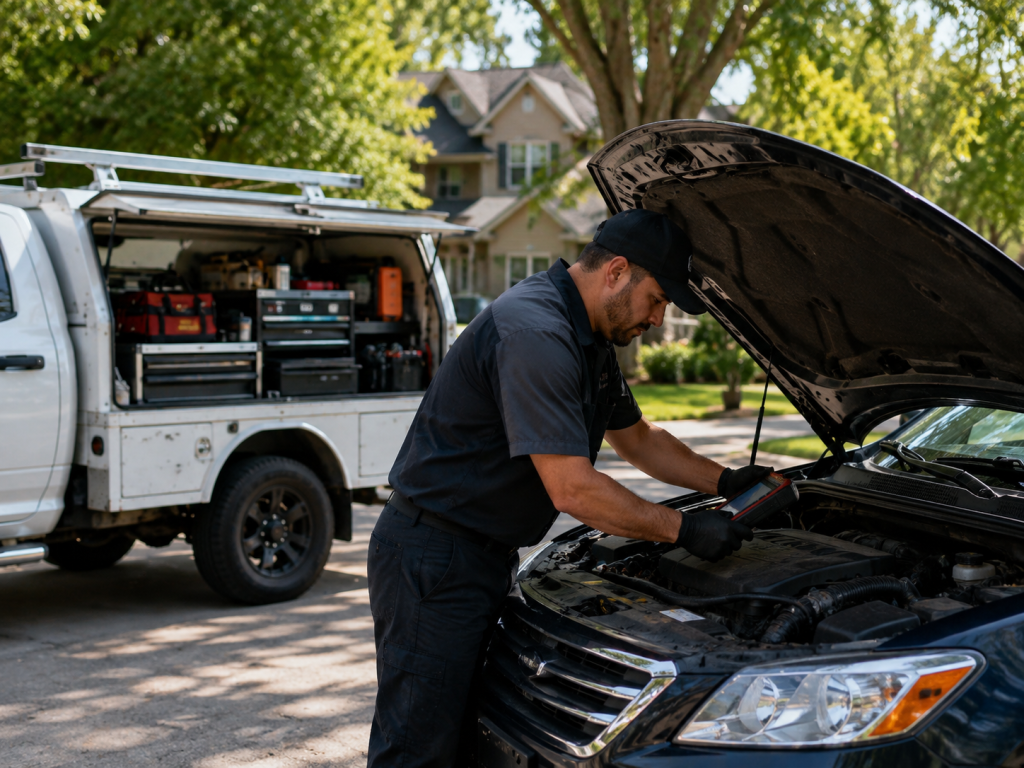
Because these electrical symptoms are often intermittent, having a technician diagnose the issue at your home or workplace, ideally during or shortly after a humid spell when the symptom is most likely to appear, can make a real difference in catching the problem accurately. A mobile mechanic who understands Houston’s climate can test connections under the actual conditions causing the issue, rather than waiting for a scheduled shop appointment on a dry day when the symptom may not show up at all.
We covered the broader benefits of this approach in our article on why mobile mechanics are better than traditional auto shops in Houston, which explains how convenience and local familiarity come together, especially useful for tracking down elusive electrical issues tied to our climate.
Do Not Ignore Intermittent Electrical Symptoms
Houston’s humidity is simply part of living here, but the electrical problems it causes do not have to catch you off guard. Paying attention to early warning signs, keeping connections clean and protected, and addressing small issues before they grow into starting failures or persistent dashboard warnings will keep your vehicle far more reliable throughout the year.
If you have been dealing with electrical symptoms that seem to come and go with the weather, visit our homepage to learn more about our diagnostic services, or reach out through our contact us page to schedule a visit at your home or office.
Catching humidity related corrosion early is one of the simplest ways to avoid an unpredictable electrical failure during Houston’s next heavy, humid stretch of weather.